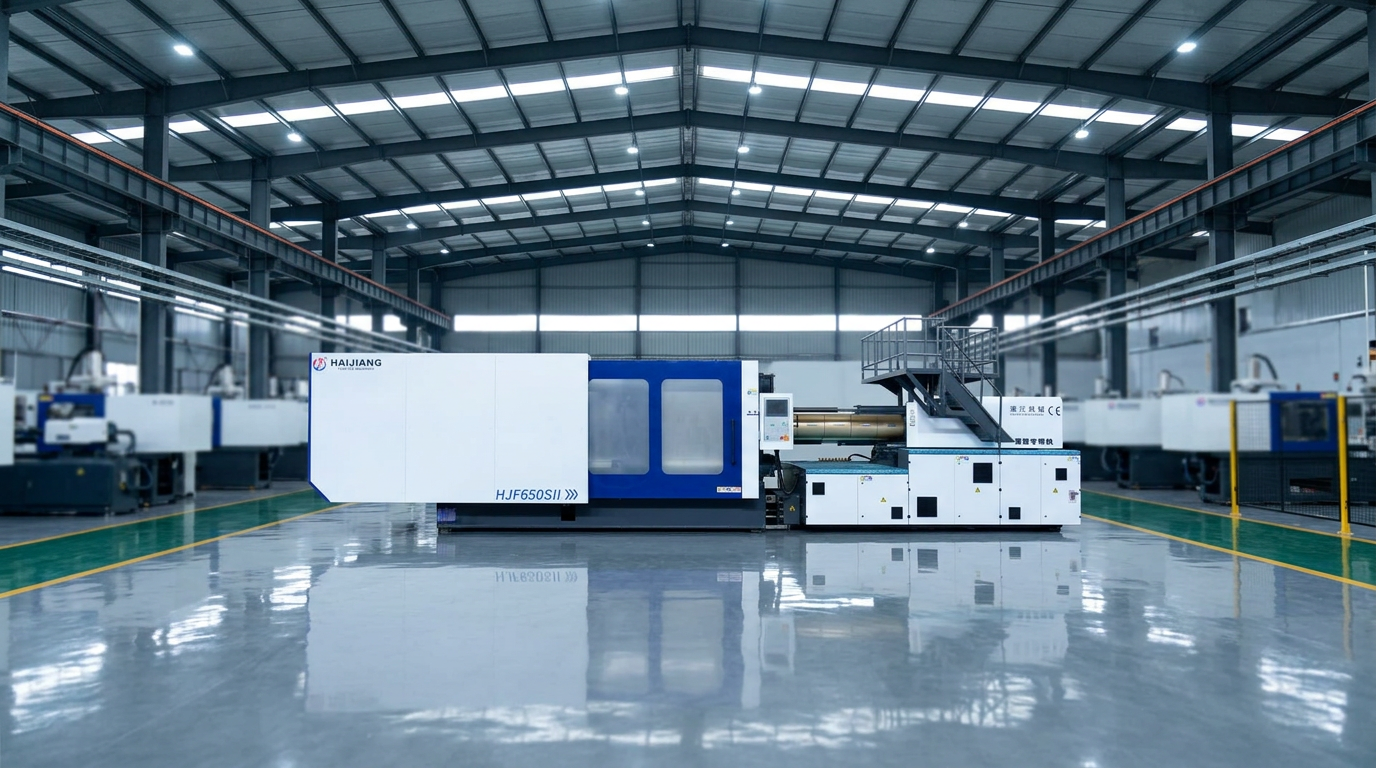
What Is a PET Preform Injection Molding Machine?
What Is a PET Preform Injection Molding Machine?
A PET preform injection molding machine is used to manufacture PET preforms—the intermediate plastic components that are later reheated and stretch-blow molded into bottles, jars and containers.
PET preforms typically have a finished neck and thread but a thick, tube-shaped body. The neck geometry is formed during injection molding and normally remains unchanged during the bottle-blowing process. For this reason, the accuracy of the injection machine and preform mold directly affects bottle sealing, appearance and blowing performance.
A complete PET preform production system normally includes:
PET material drying and dehumidification
Material conveying
PET injection molding machine
Multi-cavity PET preform mold
Mold dehumidification system
Industrial chiller
Air compressor
Cooling-water system
Robot or preform take-out system
Inspection, conveying and packing equipment
The terms PET preform injection machine, preform making machine, preform molding machine and bottle preform making machine usually refer to the same core equipment.
What Products Can a PET Preform Machine Produce?
What Products Can a PET Preform Machine Produce?
A PET preform machine can manufacture preforms for different packaging applications, including:
Mineral-water bottles
Carbonated soft-drink bottles
Juice and beverage bottles
Edible-oil bottles
Dairy-product containers
Pharmaceutical bottles
Cosmetic containers
Household chemical bottles
Wide-mouth PET jars
Hot-fill beverage bottles
The final bottle application determines the required preform weight, neck finish, wall-thickness distribution, resin grade and production process.
For example, a lightweight water-bottle preform and a carbonated-drink preform may have different weight, pressure-resistance and barrier requirements even when their bottle volumes are similar.
Content for this section has not been published yet.
How Does PET Preform Injection Molding Work?
How Does PET Preform Injection Molding Work?
The PET preform injection molding process consists of several controlled stages.
1. PET Resin Drying
PET resin easily absorbs moisture from the surrounding air. If wet material is processed directly, hydrolysis may occur during melting, reducing the resin’s molecular weight and mechanical performance.
The PET resin must therefore be dried and dehumidified before entering the injection molding machine. Drying temperature, time, airflow and dew point must be controlled according to the resin supplier’s recommendations.
Inadequate drying can cause:
Reduced preform strength
Brittleness
Increased acetaldehyde
Surface defects
Poor clarity
Unstable bottle-blowing performance
2. Material Feeding and Plasticizing
Dried PET resin is conveyed into the injection unit. The screw rotates and moves the material forward while controlled barrel heating and shear transform the resin into a uniform melt.
A PET injection moulding machine requires an injection unit designed for PET processing. Screw geometry, plasticizing capacity and temperature control must match the material and total shot weight.
3. High-Pressure Injection
The molten PET is injected into the preform mold through the hot-runner system. Injection speed and pressure must be carefully controlled to fill all cavities uniformly without excessive stress, burn marks or short shots.
4. Holding Pressure
After cavity filling, holding pressure compensates for material shrinkage. Correct holding-pressure settings help maintain preform weight, dimensional stability and neck accuracy.
5. Cooling
Cooling usually represents a significant part of the total molding cycle. The mold’s cooling-channel design, water temperature, flow rate and heat-transfer efficiency directly affect production output.
High-performance systems may use post-mold cooling to remove heat from the preforms after mold opening. This can shorten the in-mold cooling time and increase overall productivity.
6. Ejection and Preform Handling
After sufficient cooling, the mold opens and the preforms are removed by an ejector or robotic take-out system. The preforms may then pass through additional cooling, inspection, counting and packing stages.
Content for this section has not been published yet.
PET Preform Injection Molding Machine Components
PET Preform Injection Molding Machine Components
A typical PET preform injection machine contains the following major systems.
Injection Unit
The injection unit melts, meters and injects PET resin. Important parameters include:
Screw diameter
Screw length-to-diameter ratio
Maximum shot volume
Plasticizing capacity
Injection pressure
Injection speed
Temperature-control accuracy
The required shot capacity should be calculated from the combined weight of all preforms produced in one cycle, plus the appropriate process margin.
Clamping Unit
The clamping unit opens and closes the mold while maintaining sufficient force during injection. Insufficient clamping force may cause flashing, while an oversized machine can unnecessarily increase investment and energy consumption.
Machine selection should consider:
Required clamping force
Mold dimensions
Tie-bar spacing
Mold-opening stroke
Minimum and maximum mold thickness
Ejector stroke
Robot installation space
Servo-Hydraulic or Electric Drive System
Modern PET injection molding machines commonly use servo-hydraulic or all-electric drive technology.
Servo-hydraulic machines offer a practical balance between purchase price, energy efficiency and maintenance requirements. All-electric machines may provide excellent precision and cleanliness but normally require a higher initial investment.
Control System
The machine controller manages injection speed, pressure, temperature, screw position, clamping movement and cycle timing. A suitable system should provide:
Recipe storage
Real-time process monitoring
Alarm records
Production statistics
Password-protected access
Remote diagnostics
Quality-data interfaces
Multilingual operation
Content for this section has not been published yet.
PET Preform Mold: Why the Mold Is Critical
PET Preform Mold: Why the Mold Is Critical
The PET preform mold is one of the most important components in the complete production system. Even a high-quality injection machine cannot consistently produce acceptable preforms with a poorly designed mold.
A PET preform mould normally includes:
Core
Cavity
Neck ring
Hot-runner system
Gate
Cooling channels
Ejection mechanism
Mold frame
Common Mold Cavity Configurations
PET preform molds are available in configurations such as:
8 cavities
16 cavities
24 cavities
32 cavities
48 cavities
72 cavities
96 cavities
128 cavities or more
More cavities can increase output, but they also require a larger injection unit, higher clamping capacity, more efficient cooling and a greater initial investment.
The best cavity number should be determined by annual demand, cycle time, preform weight, working hours and the desired number of production lines.
Hot-Runner System
Most modern PET preform molds use a hot-runner system to reduce material waste and improve cavity filling.
A properly engineered hot runner helps provide:
Balanced melt distribution
Consistent cavity filling
Reduced gate defects
Stable preform weight
Lower production waste
Shorter cycle times
Neck Finish
The preform neck must match the bottle cap and filling-line requirements. Common neck standards and customized neck finishes may be used depending on the target market.
The buyer should confirm:
Neck diameter
Thread design
Tamper-evident ring
Cap specification
Bottle application
Applicable packaging standard
The neck specification should be finalized before mold manufacturing begins.
Content for this section has not been published yet.
PET Preform Machine vs PET Bottle Blowing Machine
PET Preform Machine vs PET Bottle Blowing Machine
A PET preform machine and a PET bottle blowing machine perform different operations.
Equipment | Main Function | Input | Output |
|---|---|---|---|
PET preform injection molding machine | Manufactures PET preforms | PET resin | Finished preforms |
PET stretch blow molding machine | Forms bottles from preforms | PET preforms | Empty PET bottles |
The injection molding machine produces the preform, including its final neck and thread. The bottle-blowing machine reheats the preform and stretches it inside a bottle mold to create the final container.
A preform bottle machine is sometimes used informally to describe either machine. Buyers should specify whether they need preform manufacturing equipment, bottle-blowing equipment or a complete integrated bottle-production project.
Content for this section has not been published yet.
How to Select the Right PET Preform Injection Machine
How to Select the Right PET Preform Injection Machine
1. Define the Preform Specification
Before selecting a machine, provide:
Preform drawing
Preform weight
Neck finish
Material grade
Color requirements
Final bottle volume
Bottle application
Annual production target
If no preform drawing is available, a sample bottle, cap and preform can be used as references during preliminary evaluation.
2. Calculate the Required Output
Production capacity depends on:
Hourly Output=Cycle Time in Seconds3600×Number of Cavities
For example, a 48-cavity mold operating at a theoretical cycle time of 15 seconds produces:
153600×48=11,520
The theoretical output is approximately 11,520 preforms per hour.
Actual saleable output will be lower after accounting for startup, color changes, maintenance, rejects and production interruptions.
3. Match Shot Weight and Plasticizing Capacity
The total shot weight is approximately:
Preform Weight×Number of Cavities
A 25-gram preform produced in a 48-cavity mold has a basic shot weight of:
25×48=1,200 grams
The selected injection unit must provide adequate shot capacity and plasticizing performance, with a reasonable operating margin.
4. Verify Clamping Force and Mold Dimensions
The machine must accommodate the PET preform mold physically and technically. Buyers should verify tie-bar spacing, platen dimensions, mold thickness, opening stroke and clamping force—not merely compare machine tonnage.
5. Consider Cooling Capacity
Insufficient cooling causes longer cycles and unstable production. The chiller, cooling tower, pumps and water pipes must be sized for the mold and machine’s total heat load.
6. Evaluate Local Service
For a high-output preform production line, downtime can be costly. Machine selection should therefore consider:
Availability of spare parts
Remote technical support
Local service capability
Installation and commissioning
Operator training
Preventive-maintenance plans
Warranty conditions
Content for this section has not been published yet.
PET Preform Injection Molding Machine Price
PET Preform Injection Molding Machine Price
The PET preform injection molding machine price cannot be accurately determined from machine tonnage alone. Pricing depends on the entire production configuration.
Major price factors include:
Required clamping force
Injection volume
Plasticizing capacity
Servo-hydraulic or electric drive
Number of mold cavities
Preform mold design
Hot-runner brand and configuration
Cycle-time target
Robot and post-mold cooling
Dryer and dehumidifier
Chiller and cooling-water system
Material conveying system
Inspection and packing automation
Installation and training
Spare parts and warranty scope
A machine-only quotation may appear inexpensive but may exclude the mold, auxiliaries, cooling system, commissioning and production validation.
For a meaningful investment comparison, request a complete quotation covering:
Main injection molding machine
PET preform mold
Drying and material-handling system
Cooling system
Air system
Robot and conveyor
Inspection and packing
Installation and commissioning
Training and spare parts
Production acceptance criteria
The lowest purchase price does not necessarily provide the lowest cost per preform.
Indicative Price Range: USD 35,000–150,000
The final price depends on the machine configuration, injection capacity, mold cavity number, cycle-time requirements and auxiliary equipment included.
Content for this section has not been published yet.
PET Preform Machine Price and Production Economics
PET Preform Machine Price and Production Economics
When comparing equipment, buyers should calculate the production cost per 1,000 acceptable preforms.
The calculation should include:
PET resin consumption
Masterbatch and additives
Electricity
Cooling water
Compressed air
Labor
Mold maintenance
Machine maintenance
Reject rate
Packaging
Depreciation
Factory overhead
Material is normally a major component of preform production cost. A small reduction in preform weight can create significant annual savings, but lightweighting must not compromise bottle strength, top-load performance, pressure resistance or filling-line reliability.
Content for this section has not been published yet.
New vs Used PET Preform Machine for Sale
New vs Used PET Preform Machine for Sale
A used PET preform machine may reduce the initial investment, but its actual condition must be independently inspected.
Check the following before purchasing:
Machine manufacturing year
Operating hours
Maintenance history
Screw and barrel wear
Hydraulic-system condition
Servo-motor and drive condition
Platen and tie-bar condition
Controller availability
Spare-parts availability
Injection repeatability
Actual cycle time
Mold compatibility
Drying and cooling equipment
Ability to conduct a trial run
For a used PET preform mould for sale, buyers should also inspect cavity wear, neck-ring condition, hot-runner leakage, cooling channels, gate quality and compatibility with the proposed machine.
Used equipment should be purchased based on inspection and production trials—not photographs alone.
Content for this section has not been published yet.
Comparing General-Purpose and Dedicated PET Preform Machines
Comparing General-Purpose and Dedicated PET Preform Machines
A general-purpose injection molding machine may sometimes be adapted for PET production. However, a dedicated PET preform injection machine is usually better suited to continuous, high-volume production.
A dedicated system may provide:
PET-optimized screw design
Higher plasticizing capacity
More stable melt-temperature control
Faster mold movements
Improved cooling integration
Better compatibility with multi-cavity molds
Automated preform handling
Lower energy consumption per preform
For small-volume or flexible production, a general-purpose machine with the correct PET configuration may be considered. For high-output bottle-preform manufacturing, a dedicated system is normally more economical over the full production life.
Content for this section has not been published yet.
Husky, SACMI, Toshiba and Alternative PET Preform Machines
Husky, SACMI, Toshiba and Alternative PET Preform Machines
Buyers frequently search for terms such as Husky preform machine, SACMI injection molding machine and Toshiba PET preform machine when evaluating established equipment platforms.
The correct choice should not be based on brand recognition alone. Compare the complete technical and commercial package:
Guaranteed output
Preform quality
Cycle time
Energy consumption
Mold-cavity configuration
Resin and color-change flexibility
Maintenance costs
Spare-parts lead time
Local technical support
Total project investment
Alternative PET preform machine manufacturers may offer a lower initial investment and greater configuration flexibility. However, claimed capacity and cycle time should be verified through reference projects, mold trials or clearly defined factory acceptance testing.
Husky, SACMI and Toshiba are trademarks of their respective owners. Their mention here is for equipment comparison and identification only.
Content for this section has not been published yet.
Quality Requirements for PET Preforms
Quality Requirements for PET Preforms
A stable preform manufacturing process should control:
Individual preform weight
Neck dimensions
Wall-thickness distribution
Transparency
Color consistency
Gate quality
Flash
Black spots
Bubbles
Crystallization
Sink marks
Short shots
Acetaldehyde level
Intrinsic-viscosity degradation
Inspection methods may include:
Visual inspection
Precision weighing
Dimensional measurement
Polarized-light inspection
Wall-thickness measurement
Gate inspection
Bottle-blowing trials
Leak testing
Top-load testing
Burst or pressure testing
The acceptance criteria should be agreed upon before equipment manufacturing and FAT.
Content for this section has not been published yet.
Auxiliary Equipment for a Preform Making Machine
Auxiliary Equipment for a Preform Making Machine
A complete bottle preform making machine project requires correctly matched auxiliary equipment.
PET Dryer and Dehumidifier
Removes moisture from PET resin and maintains stable processing conditions.
Vacuum Loader and Material Conveying
Transfers resin from storage or drying equipment to the injection machine while minimizing contamination.
Industrial Chiller
Provides controlled cooling water for the mold, machine and related systems.
Mold Dehumidifier
Prevents condensation on the mold when low-temperature cooling water is used in humid environments.
Air Compressor
Supplies compressed air for pneumatic valves, robotic handling and other auxiliary functions.
Robot and Post-Mold Cooling
Removes preforms quickly and continues cooling outside the mold, helping shorten the molding cycle.
Conveyor and Packing System
Transfers, counts and packs finished preforms. High-output plants may use automated container filling, bagging or carton packing.
Content for this section has not been published yet.
Factory Requirements for PET Preform Manufacturing
Factory Requirements for PET Preform Manufacturing
The production area should provide:
Stable electrical supply
Adequate transformer capacity
Chilled-water circulation
Cooling-water piping
Compressed air
Material-storage space
Resin drying area
Mold-handling equipment
Finished-preform storage
Ventilation and heat removal
Maintenance access
Fire protection
A factory layout should separate raw-material handling, production, inspection, packing, mold maintenance and finished-product storage.
For food, pharmaceutical or cosmetic packaging, hygiene controls and applicable local regulations should also be considered.
Content for this section has not been published yet.
FAT and Production Acceptance
FAT and Production Acceptance
Factory Acceptance Testing should confirm that the proposed PET preform manufacturing machine can achieve the agreed performance under specified conditions.
The FAT protocol may include:
Continuous production run
Verified mold-cycle time
Hourly output
Preform weight consistency
Dimensional inspection
Visual-defect inspection
Reject-rate verification
Energy-consumption measurement
Safety-function testing
Alarm testing
Robot and auxiliary-equipment operation
Bottle-blowing trial, if included
The test conditions should specify the resin grade, color, preform design, number of operating cavities, cooling-water temperature and acceptable product criteria.
Content for this section has not been published yet.
Conclusion
A PET preform injection molding machine should be selected as part of a complete production system—not as an isolated piece of equipment. Machine capacity, mold design, PET drying, cooling, automation and quality control must work together.
Before comparing a PET preform machine for sale, define the product specification and annual production target. Then compare suppliers based on guaranteed output, preform quality, energy consumption, service capability and total production cost.
A properly configured PET preform production line can deliver stable quality, shorter cycles, lower reject rates and a more competitive cost per preform.
Information Required for a PET Preform Machine Quotation
Information Required for a PET Preform Machine Quotation
To receive an accurate technical proposal and price, provide:
Preform drawing or sample
Preform weight
Neck specification
Final bottle volume and application
PET resin grade
Number of preform colors
Required hourly or annual output
Daily working hours and annual working days
Preferred mold-cavity number
Available factory voltage and frequency
Cooling-water conditions
Ambient temperature and humidity
Required automation level
Available factory area
New or used equipment preference
Installation country and city
Required delivery schedule
Required FAT and warranty scope
Without these details, a supplier can normally provide only a preliminary budget—not a reliable project quotation.
Content for this section has not been published yet.
Quick Answer
What is a PET preform injection molding machine?
It is an injection molding system used to convert dried PET resin into preforms. These preforms are subsequently reheated and stretch-blow molded into bottles or containers.
Is a PET preform machine the same as a bottle-blowing machine?
No. The preform machine manufactures the PET preform from resin. The bottle-blowing machine converts the finished preform into a bottle.
How much does a PET preform injection molding machine cost?
The price depends on machine size, injection capacity, mold-cavity number, cycle time, automation and auxiliary equipment. A complete quotation should include the machine, mold, dryer, chiller, robot, conveying system, commissioning and spare parts.
How many preforms can one machine produce per hour?
Output depends primarily on cavity number and cycle time. For example, a 48-cavity mold with a 15-second theoretical cycle can produce approximately 11,520 preforms per hour before downtime and rejects are considered.
What is the best cavity number for a PET preform mold?
There is no single best configuration. The correct number depends on required output, preform weight, machine capacity, cycle time, investment budget and future expansion plans.
Can a standard injection molding machine produce PET preforms?
It may be possible with the correct screw, injection unit, mold, dryer and process controls. However, a dedicated PET preform system generally offers better productivity and process stability for continuous production.
Why must PET resin be dried before injection molding?
PET absorbs moisture. If the moisture is not removed, hydrolysis can reduce material performance and cause brittle, cloudy or otherwise defective preforms.
What causes cloudy PET preforms?
Possible causes include inadequate drying, unsuitable melt temperature, slow cooling, crystallization, excessive residence time or contaminated material. The machine, mold, dryer and cooling system should be checked together.
What should I check when buying a used PET preform machine?
Check operating hours, maintenance records, screw and barrel wear, controls, hydraulic or electric systems, spare-parts availability and actual production performance. A loaded trial run is strongly recommended.
How do I get an accurate preform machine price?
Provide the preform drawing, weight, neck size, required output, resin grade, working schedule, electricity conditions and required automation. A technically matched proposal is more useful than requesting price by machine tonnage alone.
Request a Machine Recommendation
Send your product details and our engineering team will reply with a machine recommendation and quotation.
- · Send the product drawing, sample photo or reference product
- · Tell us the plastic material, product weight and cavity number
- · Our engineers reply with a machine recommendation and quotation